ProjectServerless Back-End
Live production cost per machine and product, from machine logs
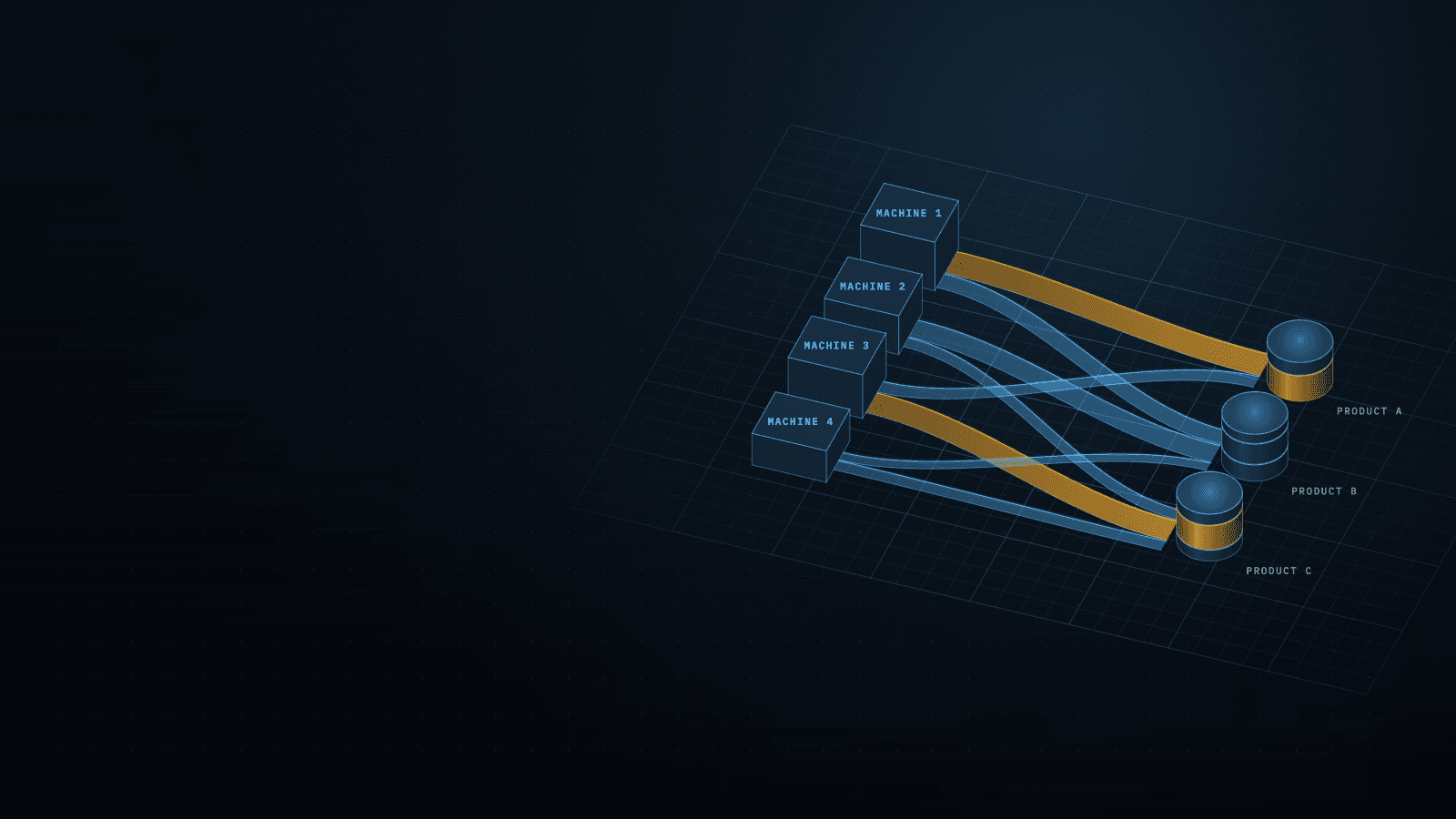
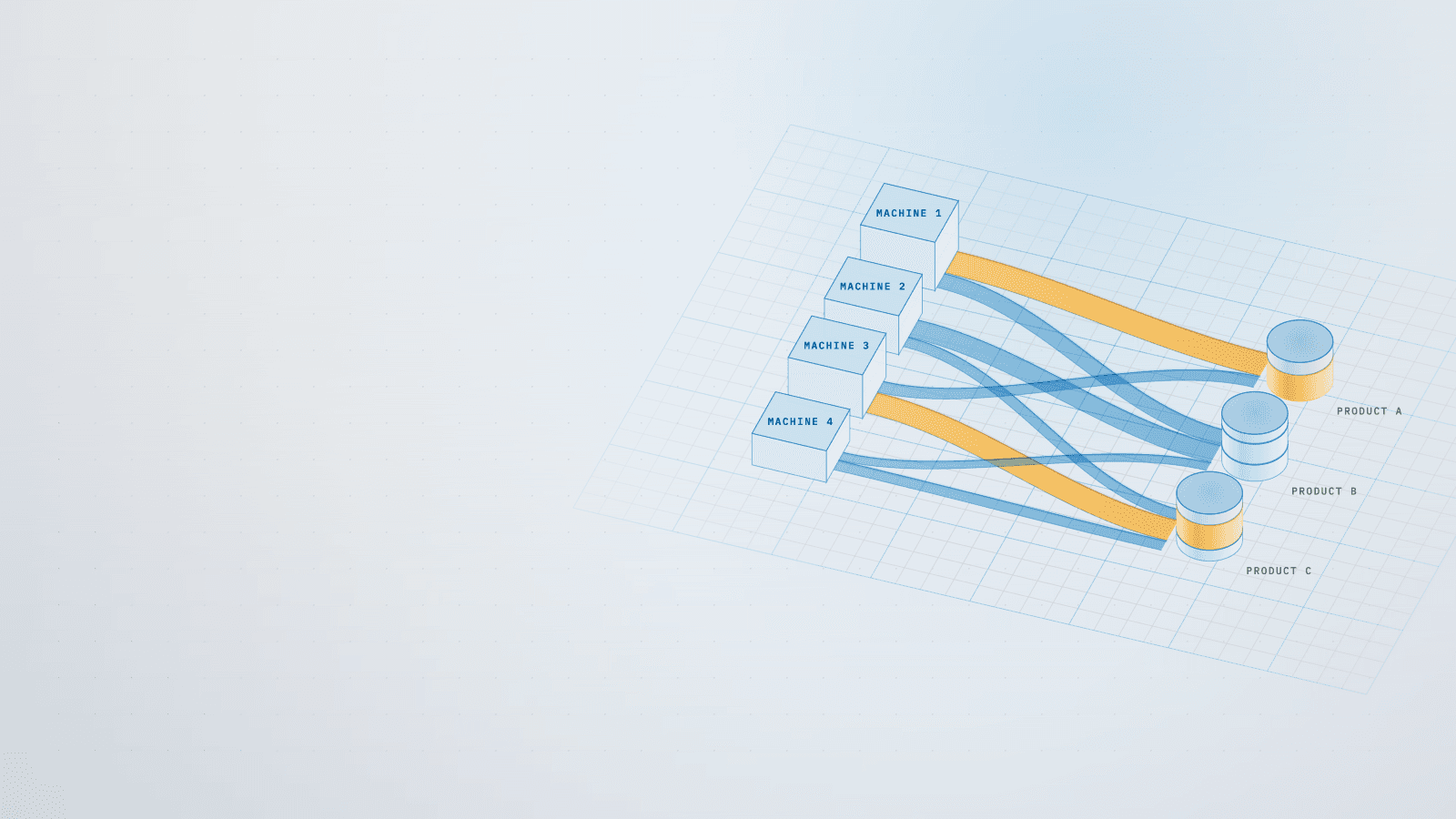
Live cost per machine and per product from laser, CNC and welding-robot logs, with forecasts of completion time and total job cost.
Stack
- AWS Step Functions
- React.js
- Streamlit
- Support Vector Machine (SVM)
- Python
- Pandas
- DynamoDB
- Kinesis
- +11
01 · How it works
- TodaytoChanged in this work
- Data flow
What it does
A platform that turns machine logs from lasers, CNC machines and welding robots into live production cost, per machine and per product. A cost model built on five drivers (operating time, energy, material, labour and maintenance) prices every run, and a model trained on history forecasts completion time and total cost for each project.
Read more
I built the pipeline, the cost and prediction models, and the per-machine dashboards project managers use to decide where to act.
6 connections· select a part to trace it
- Machine logs to Pipeline orchestrator: logs from 3 machine types
- Pipeline orchestrator to NoSQL + object storage: metrics enriched with cost
- NoSQL + object storage to Cost model: time, energy, material
- NoSQL + object storage to SVM completion model: historical project data
- Cost model to Cost micro-dashboards: cost per machine, product
- SVM completion model to Cost micro-dashboards: completion time, total cost
02What it achieved
Outcome
- Cost visibility: live cost per machine and per product, built from five cost drivers
- Planning: forecasts of completion time and total cost for each project
Read more
- Decisions: per-machine cost breakdowns that show where the money goes
- Data pipeline: continuous collection from three machine types, cleaned and validated on the way in
The challenge
Cost is only useful if it is believable, and machine logs are not written for accounting. Each machine type logs differently, so the data had to be cleaned, validated and enriched with cost information before any number reached a dashboard.
Turning operating time, energy, material, labour and maintenance into one cost per product meant agreeing on a model simple enough to explain and complete enough to trust.
Read more
The pipeline had to run continuously so costs stay current, and the completion-time model needed careful training on historical data before its forecasts could guide decisions about resources and priorities.
What I learned
A cost model succeeds when the people who use it can explain it. Keeping it to five familiar drivers made the numbers easy to challenge and therefore easier to trust. Most of the effort sat in the data: validating and enriching logs at ingestion is what made the costs believable.
Read more
Keeping the cost model separate from the forecasting model let each one change without breaking the other.
Stack
- AWS Step Functions
- React.js
- Streamlit
- Support Vector Machine (SVM)
- Python
- Pandas
- DynamoDB
- Kinesis
- SQS
- Lambda
- SageMaker
- AWS CloudWatch
- AWS S3
- AWS API Gateway
- AWS CodeCommit
- AWS CodePipeline
- DVC
- Node.js
- Serverless
Skills
- Cost modelling
- Data pipelines
- Predictive modelling
- Operational dashboards
- Cloud data platforms